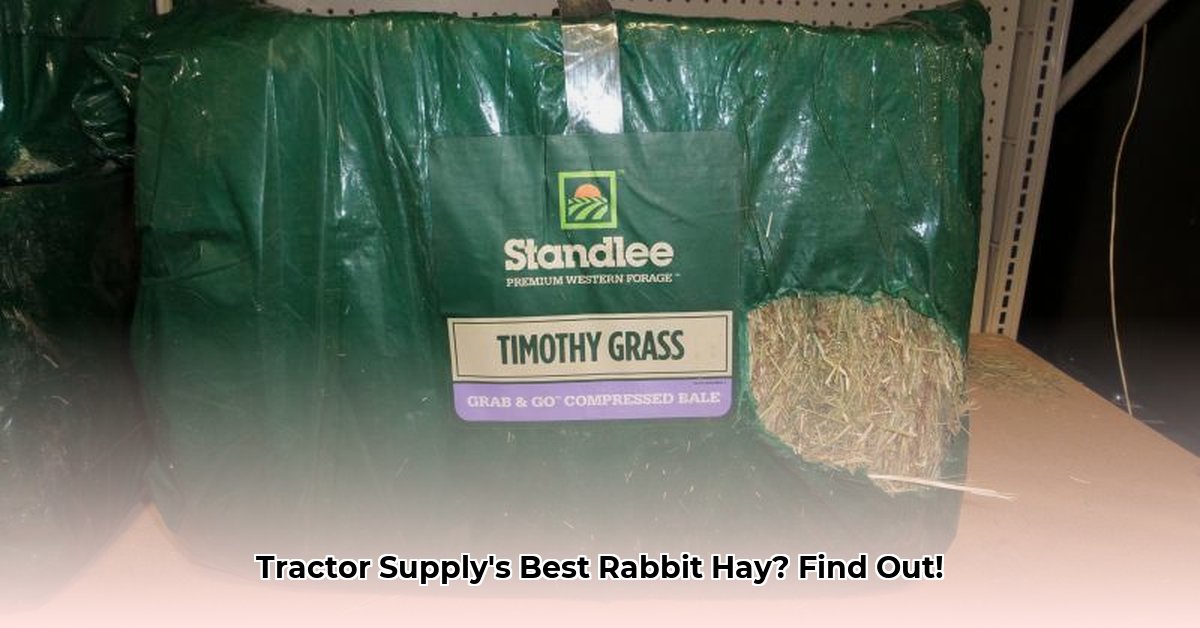
Finding the perfect hay for your beloved bunny can feel overwhelming. This guide simplifies the process, helping you select the best hay from Tractor Supply to keep your rabbit healthy and happy. We'll cover hay types, nutritional needs, sourcing, storage, and feeding best practices. For larger farms, consider equipment options.
Understanding Your Bunny's Nutritional Needs: Hay – The Cornerstone of a Healthy Diet
Rabbits are herbivores, and hay is the foundation of their diet. High-quality hay is crucial for their digestive health and overall well-being. A balanced diet prevents numerous health problems and contributes to a longer, happier life for your furry friend. Did you know that proper hay selection can significantly reduce the risk of common rabbit ailments?
Alfalfa: The Growing Bunny's Superfood
For young, growing rabbits (under six months), alfalfa hay is packed with protein, essential for building strong muscles and bones. Think of it as fuel for their rapid growth. However, remember that alfalfa's high calcium and protein content isn't ideal for adult rabbits.
Timothy Hay: The Adult Bunny's Staple
Once your rabbit reaches adulthood (around six months), switch to timothy hay. It's lower in protein and calcium, preventing urinary tract issues and maintaining a healthy weight, helping avoid problems like bladder stones. This is a critical change to support their long-term health.
Other Hay Options: Adding Variety (in Moderation)
While timothy and alfalfa are the mainstays, you can introduce small amounts of orchard grass or oat hay for variety. These should supplement, not replace, the primary hay based on your bunny's age. "Variety is the spice of life," even for bunnies!
Sourcing Your Hay from Tractor Supply: Quality and Freshness
Tractor Supply offers various hay options. Before purchasing, check the hay's condition. Look for hay free of mold, dust, and debris. It should have a pleasant, grassy aroma. Avoid anything musty or off-smelling. Selecting quality hay is a vital step in ensuring your rabbit’s health.
Storing Hay Like a Pro: Keeping it Fresh and Pest-Free
Proper storage keeps hay fresh and palatable. Store it in a cool, dark, dry place, away from pests. Good ventilation prevents mold. Think of it as preserving valuable nutrients for your bunny's daily meals.
Feeding Your Bunny: Practical Tips and Tricks
- Hay Feeders: Use a hay feeder to keep the hay clean and organized.
- Free Choice Hay: Always provide unlimited hay access.
- Clean Water: Offer fresh, clean water in a stable bowl.
- Gradual Changes: Transition between hay types gradually to avoid digestive upset. Remember that sudden dietary changes can disrupt your bunny's delicate digestive system.
Pros and Cons of Different Hay Types at Tractor Supply
| Hay Type | Pros | Cons | Suitable For |
|---|---|---|---|
| Alfalfa | High protein and nutrients; excellent for growing bunnies | High in calcium and protein; potentially problematic for adult rabbits | Young, growing rabbits |
| Timothy | Lower in calcium and protein; ideal for adult rabbits | Less protein than alfalfa; may not be suitable for pregnant/nursing does | Adult rabbits |
| Orchard Grass | Good source of fiber; palatable for many rabbits | May be less readily available than alfalfa or Timothy | Adults, can be mixed |
| Oat Hay | Sweet and palatable; good source of fiber | Can be lower in protein than other options; may not be as readily available | Adult Rabbits, can be mixed |
Important Note: Consult your veterinarian before making significant dietary changes. They can provide personalized advice based on your rabbit's individual needs.
How to Source Sustainable Timothy Hay for Rabbits
Timothy hay is crucial for adult rabbits, offering essential fiber for digestion and dental health. Sourcing sustainably benefits both your bunny and the environment. Did you know that locally sourced hay is often fresher and more affordable?
Understanding Your Rabbit's Needs
Why Timothy hay? Its high fiber content prevents dental problems and supports digestive health. Second-cut timothy is generally preferred for its softer texture.
Sourcing Sustainable Timothy Hay: Finding the Best Options
- Local Farms: Connect with local farms for affordable, sustainable hay. You can often negotiate better pricing for bulk purchases.
- Online Forums and Communities: Rabbit owner communities share hay sources and insights.
- Exploring Alternatives: If timothy isn't readily available, consider orchard grass or fescue.
- The Circular Economy Approach (Advanced): Explore the potential of using rabbit manure to re-grow hay (requires further research).
Making Informed Decisions: Factors Beyond Price
Consider the hay's quality: Is it dust-free? Does it smell fresh? Avoid moldy or dusty hay. Inquire about farming practices to ensure pesticide-free options. The health of your bunny should be your priority.